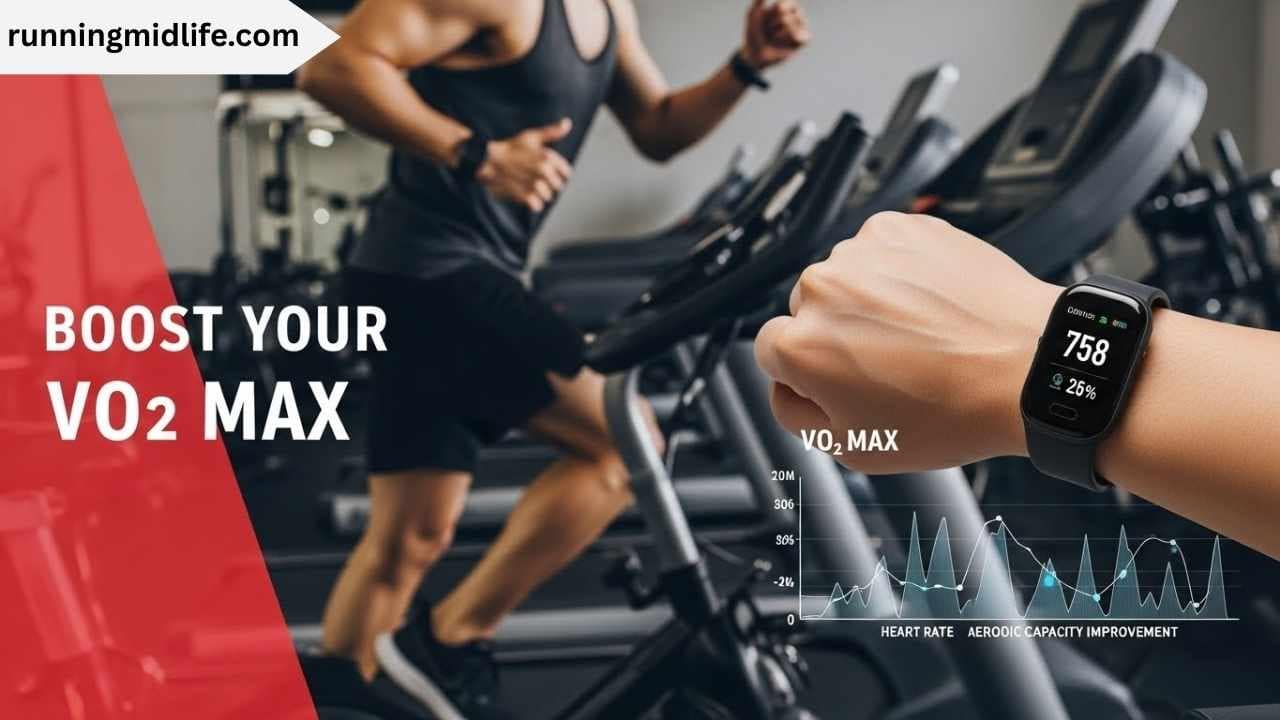
When it comes to improving VO2 Max, the intensity, consistency, and structure of your workouts are key. Whether you’re an elite athlete or a beginner, boosting your VO2 Max can significantly enhance your endurance, fitness, and overall cardiovascular health.
In this blog, I’ll not only share 3 effective VO2 Max workouts but also provide practical tips, the pros and cons of each, and how they contribute to increasing your VO2 Max.
These workouts are designed for everyone runners, cyclists, swimmers, or those just looking to improve their cardiovascular fitness.
Let’s dive into high-intensity and endurance workouts that you can incorporate into your training plan to increase your VO2 Max.
Key Takeaways
-
HIIT workouts improve VO2 Max by challenging your body to work at maximum capacity.
-
Interval training builds endurance and increases the ability to perform at higher intensities.
-
Steady-state cardio (Zone 2) is great for long-term VO2 Max improvements and is ideal for beginners.
-
Tracking your VO2 Max regularly helps measure progress and adjust your training plan.
-
Consistency and recovery are critical to seeing real progress in aerobic capacity and endurance performance.
What is VO2 Max?
Before we dive into the workouts, let’s review VO2 Max for clarity.
VO2 Max refers to the maximum amount of oxygen your body can utilize during intense exercise. It’s the gold standard of cardiovascular fitness and a key metric for athletes. The higher your VO2 Max, the more efficient your body is at processing oxygen, which directly improves your endurance and exercise performance.
The best part? You can increase your VO2 Max through the right mix of exercise, nutrition, and recovery. So, let’s explore the 3 best workouts for enhancing your VO2 Max.
1. High-Intensity Interval Training (HIIT)
What is HIIT?
HIIT involves alternating between short, intense bursts of exercise followed by periods of low-intensity recovery. It’s a time-efficient way to boost VO2 Max and improve aerobic capacity. HIIT is highly effective because it pushes your body to maximal oxygen uptake, forcing it to adapt and improve.
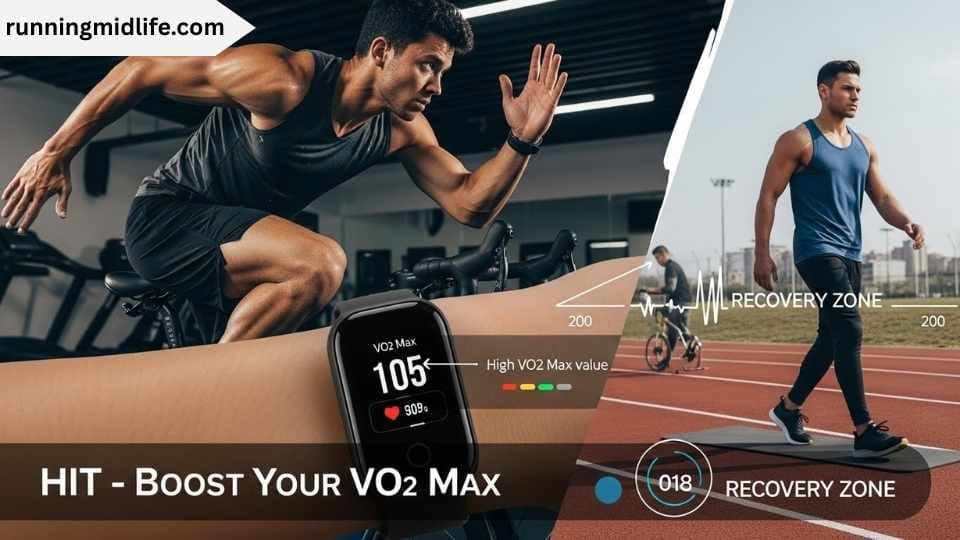
How to Perform HIIT:
-
Warm-up for 5–10 minutes with a light jog or cycling.
-
Perform 30 seconds of maximum effort (e.g., sprinting or cycling at max speed).
-
Follow with 60–90 seconds of low-intensity recovery (e.g., slow cycling or walking).
-
Repeat the intervals for 10–20 minutes.
-
Cool down with 5–10 minutes of light activity.
Why It Works for VO2 Max:
HIIT enhances VO2 Max by pushing your heart and lungs to their maximum capacity. These intervals mimic real-world exertion and force your body to adapt by improving oxygen consumption and lactate threshold. Over time, you’ll be able to sustain higher intensities for longer periods, ultimately improving your cardiovascular fitness.
Pros:
-
Time-efficient: You can achieve maximum benefits in a short time.
-
Increases aerobic capacity: Helps your body use oxygen more efficiently.
-
Burns fat: HIIT helps you shed fat while improving endurance.
-
No equipment needed: Can be done with just your bodyweight or minimal gear.
Cons:
-
High-impact: Intense effort can increase the risk of injury, especially if form is compromised.
-
Requires recovery: HIIT can lead to fatigue and requires proper rest to prevent overtraining.
-
Not suitable for beginners: It can be overwhelming if you’re just starting to exercise.
Best For:
-
Improving VO2 Max rapidly.
-
Endurance athletes looking for a time-efficient workout.
-
Anyone looking to boost cardiovascular fitness and fat loss.
2. Interval Training for Endurance Athletes
What is Interval Training?
Interval training involves alternating between higher-intensity efforts and rest periods. This type of training improves aerobic endurance and VO2 Max by gradually increasing the body’s ability to process oxygen over time. It’s ideal for runners, cyclists, and triathletes who want to improve their endurance at maximal effort.
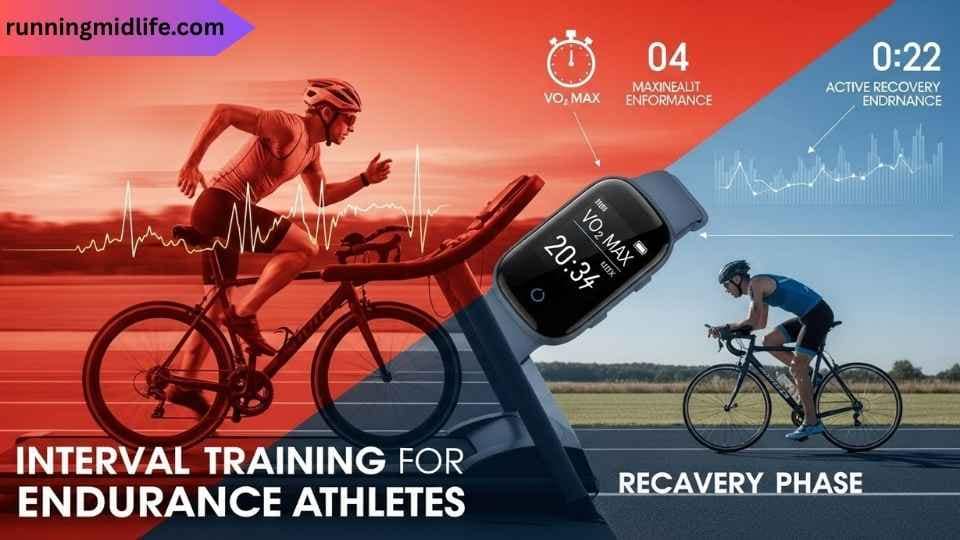
How to Perform Interval Training:
-
Warm-up for 10 minutes at an easy pace.
-
Perform 3–5 minutes at 85–90% of your max effort (race pace for runners, moderate cycling speed).
-
Follow with 2–3 minutes of active recovery (slow jog, easy cycling).
-
Repeat for 4–6 sets, depending on your fitness level.
-
Cool down with 5-10 minutes of light activity.
Why It Works for VO2 Max:
By alternating between high-intensity and recovery, you train your cardiovascular system to work harder and recover quicker, which improves VO2 Max. It also enhances the body’s ability to push past aerobic thresholds into anaerobic zones and recover quickly.
Pros:
-
Boosts endurance by training your body to sustain high efforts.
-
Improves lactate threshold and muscle oxygen efficiency.
-
Great for cyclists, runners, and other endurance athletes.
Cons:
-
Requires more time than HIIT (but still efficient).
-
Can be mentally challenging, especially at high intensities.
-
Risk of overtraining if recovery isn’t prioritized.
Best For:
-
Endurance athletes preparing for races like marathons or cycling events.
-
Those looking to improve sustained endurance and VO2 Max.
3. Steady-State Cardio (Zone 2 Training)
What is Steady-State Cardio (Zone 2 Training)?
Steady-state cardio is a moderate-intensity workout where you maintain a consistent, comfortable pace for an extended period, typically 30–60 minutes. Zone 2 training refers to a specific heart rate zone where you are aerobically challenged, but you can still hold a conversation without gasping for breath. It’s low to moderate intensity, and it’s a great way to build aerobic endurance and increase VO2 Max over time.
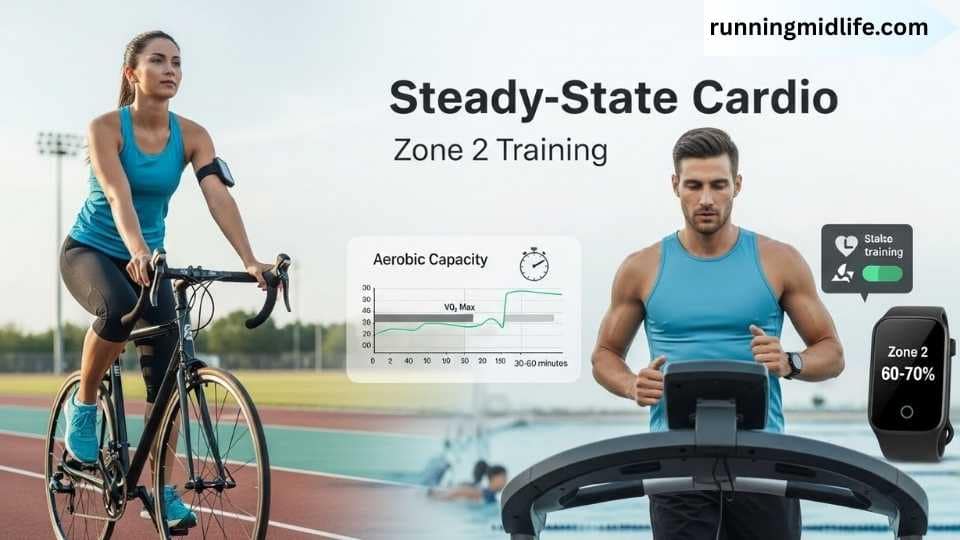
How to Perform Steady-State Cardio:
-
Warm-up with 5-10 minutes of light cardio.
-
Maintain a steady pace at 60-70% of your max heart rate (Zone 2).
-
Continue the activity for 30–60 minutes (running, cycling, swimming, etc.).
-
Cool down with 5–10 minutes of easy activity.
Why It Works for VO2 Max:
Training in Zone 2 enhances your ability to utilize oxygen efficiently, improving aerobic capacity and helping to increase VO2 Max. It also strengthens your heart and lungs, making them more efficient at delivering oxygen to your muscles.
Pros:
-
Improves endurance without pushing you to exhaustion.
-
Low risk of injury because it’s not high-intensity.
-
Good for long-term improvements in VO2 Max.
-
Great for beginners or anyone recovering from injury.
Cons:
-
Slower improvements compared to HIIT or interval training.
-
Monotonous for some, especially those who prefer intense workouts.
-
Requires consistency over time to see significant gains.
Best For:
-
Beginners looking to improve overall fitness.
-
Those seeking long-term aerobic endurance gains.
-
Endurance athletes training for longer races or events.
How to Track Your VO2 Max Progress
The good news is that you don’t need a lab test to measure your VO2 Max progress. Fitness trackers like the Garmin, Apple Watch, or Fitbit can give you a good VO2 Max estimate based on your heart rate and exercise intensity. While they might not be 100% accurate compared to a metabolic cart used in lab tests, they provide a solid way to track improvements over time.
My Opinion
Each of the three workouts above HIIT, interval training, and steady-state cardio offers unique benefits for improving VO2 Max and endurance. The key to success is consistency, progressive overload, and integrating these workouts into a balanced training plan that aligns with your fitness goals. Whether you’re looking to run faster, cycle longer, or boost overall fitness, these VO2 Max workouts will help you get there.
By focusing on interval training, aerobic endurance, and high-intensity efforts, you’ll see measurable improvements in your cardiorespiratory fitness, and before you know it, your VO2 Max will be higher than ever.
FAQs
How can I increase my VO2 Max?
You can increase your VO2 Max through HIIT, interval training, and steady-state cardio workouts, along with proper recovery and nutrition.
Do I need a VO2 Max test to track progress?
No, you don’t need a lab test. Fitness trackers like Garmin, Apple Watch, and Fitbit can estimate your VO2 Max based on heart rate and exercise intensity.
How often should I do HIIT workouts for VO2 Max improvement?
For VO2 Max improvement, aim for 2-3 HIIT sessions per week, combined with steady-state cardio and adequate recovery.
Can I improve my VO2 Max if I’m a beginner?
Absolutely! Even if you’re a beginner, consistent endurance and interval training will help you improve your VO2 Max over time.
What is Zone 2 training and how does it help VO2 Max?
Zone 2 training is moderate-intensity cardio that improves aerobic capacity and helps increase VO2 Max by training your body to utilize oxygen more efficiently.