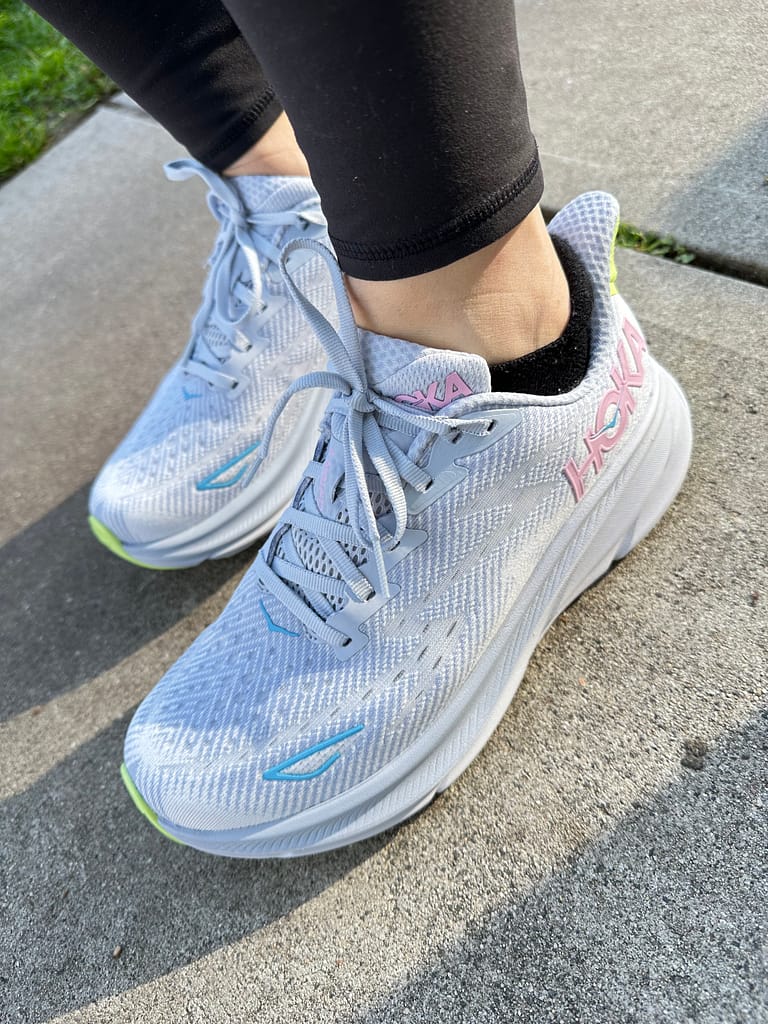
Best Running Shoes for Women Over 50: Why HOKA Became My Go-To After 50

Best running shoes for women over 50 are not just about comfort—they are about longevity, injury prevention, and continuing to do what you love well into midlife and beyond.
As a 53-year-old marathoner, I’ve spent over a decade running in HOKA shoes—especially the Clifton series—and I can confidently say they have been a turning point in my running journey. Before switching, I rotated through brands like Brooks and ASICS and dealt with recurring injuries: plantar fasciitis, knee pain, and nagging shin splints.
Since committing to HOKA, those issues have largely disappeared.
This guide will walk you through:
- Why older runners need different shoe features
- The science behind heel fat loss and pain
- Why HOKA stands out
- A comparison of top HOKA models for women over 50
Why Running After 50 Requires a Different Approach
As we age, our bodies undergo structural and physiological changes that directly affect running mechanics:
1. Loss of Heel Fat Pad Cushioning
Research shows that the heel fat pad thins and stiffens with age, reducing its natural shock absorption. Studies published in Clinical Biomechanics indicate that:
- Heel pad thickness can decrease by up to 20%–30% with aging
- Elasticity declines, meaning less rebound and more impact stress
This is critical because the heel absorbs the initial ground reaction force, especially for heel strikers—which many runners over 50 are.
2. Reduced Joint Stability
Muscle mass and tendon elasticity decrease over time, leading to:
- Less ankle stability
- Increased risk of overpronation
- Higher injury susceptibility
3. Slower Recovery
Microtrauma accumulates more quickly, and recovery takes longer, making injury prevention more important than ever.
Why Heel Pain Is So Common After 50
With reduced heel cushioning, the foot experiences:
- Increased stress on the plantar fascia
- Higher impact forces traveling to knees and hips
- Greater likelihood of conditions like plantar fasciitis
The key takeaway:
You need a shoe that replaces what your body is losing—cushioning and stability.
How HOKA Solves These Problems
HOKA running shoes are uniquely designed to address exactly these age-related issues.
1. Maximum Cushioning
HOKA’s signature thick EVA midsoles provide:
- Superior shock absorption
- Reduced impact on joints
- Enhanced comfort for long runs
2. Meta-Rocker Technology
The curved sole helps:
- Smooth transitions from heel to toe
- Reduce strain on the plantar fascia
- Improve running efficiency
3. Wide Base for Stability
Unlike traditional stability shoes, HOKA uses:
- A broad platform instead of rigid medial posts
- Natural support without feeling restrictive
My Experience: Why HOKA Clifton Changed Everything
For the past 10 years, the Clifton has been my go-to shoe.
Before HOKA:
- Frequent injuries
- Constant shoe switching
- Limited mileage
After switching:
- No recurring injuries
- Consistent marathon training
- Confidence in every step
The Clifton strikes the perfect balance between soft cushioning and lightweight responsiveness, which is critical for older runners who still want performance.
HOKA Running Shoes Comparison for Women Over 50
Here’s a breakdown of the most popular HOKA models and what they’re best suited for:
1. HOKA Clifton (Best All-Around Choice)
Best for: Daily running, long runs, marathon training
Why it works for women over 50:
- Lightweight cushioning reduces fatigue
- Excellent shock absorption for aging joints
- Neutral support with inherent stability
Pros:
- Balanced cushioning
- Versatile for all distances
- Prevents impact-related injuries
Cons:
- Not ideal for severe overpronation
👉 My recommendation:
If you’re unsure where to start, start here.
2. HOKA Bondi (Maximum Cushioning)
Best for: Recovery runs, walking, severe heel pain
Why it works:
- The most cushioned shoe in HOKA’s lineup
- Ideal for runners with plantar fasciitis or joint pain
Pros:
- Ultra-soft ride
- Excellent for heel protection
- Reduces impact stress dramatically
Cons:
- Heavier than Clifton
- Less responsive
👉 Best for: Runners prioritizing comfort over speed
3. HOKA Arahi (Stability Support)
Best for: Mild to moderate overpronation
Why it works:
- Features HOKA’s J-Frame stability technology
- Provides support without stiffness
Pros:
- Lightweight stability
- Reduces inward foot collapse
- Helps prevent knee and hip issues
Cons:
- Slightly firmer than Clifton
👉 Best for: Runners needing stability without bulk
4. HOKA Gaviota (Maximum Stability)
Best for: Severe overpronation, joint instability
Why it works:
- Combines maximum cushioning + strong stability
- Ideal for runners recovering from injuries
Pros:
- Highly supportive
- Great for heavier runners or those with joint issues
Cons:
- Bulky feel
👉 Best for: Stability-first runners
5. HOKA Rincon (Lightweight Speed Option)
Best for: Tempo runs, race days
Why it works:
- Lightweight with moderate cushioning
- Keeps legs fresh without sacrificing protection
Pros:
- Fast and responsive
- Still cushioned enough for older runners
Cons:
- Less durable
👉 Best for: Experienced runners who want speed
Why HOKA Outperforms Traditional Brands for Older Runners
Many runners over 50 started with brands like Brooks or ASICS. While those are solid, they often:
- Focus on traditional cushioning
- Lack the maximalist design that reduces impact
HOKA’s difference:
- More cushioning = less joint stress
- Rocker geometry = smoother stride
- Wider base = better balance
How HOKA Helps Prevent Common Injuries After 50
1. Plantar Fasciitis
- Reduced heel impact
- Better arch support
2. Knee Pain
- Shock absorption limits joint stress
3. Hip Pain
- Improved alignment and gait
Tips to Maximize the Benefits of Your Running Shoes
Even the best running shoes for women over 50 work best when combined with smart habits:
1. Rotate Your Shoes
Use at least 2 pairs to:
- Extend lifespan
- Reduce repetitive stress
2. Replace Regularly
Every 300–400 miles to maintain cushioning
3. Strength Training
Focus on:
- Calves
- Glutes
- Core
4. Listen to Your Body
Pain is feedback—not something to push through
For more research checkout the following site:
- American College of Sports Medicine: https://www.acsm.org
- Mayo Clinic (Plantar Fasciitis): https://www.mayoclinic.org
- HOKA Official Website: https://www.hoka.com
Final Thoughts
Finding the best running shoes for women over 50 is not about chasing trends—it’s about protecting your body so you can keep running for years to come.
For me, HOKA—especially the Clifton—has been the difference between constant injury and consistent performance.
As we age, we lose natural cushioning, especially in the heels. That makes choosing the right shoe not just important—but essential.
If you want to run stronger, longer, and pain-free after 50, HOKA is one of the smartest investments you can make.
HOKA Running Shoes Comparison for Women Over 50
| Model | Best For | Cushioning | Stability | Weight Feel | Ideal Runner |
|---|---|---|---|---|---|
| Clifton | Daily training, long runs | Medium-High | Neutral | Lightweight | All-around runners over 50 |
| Bondi | Recovery, heel pain | Maximum | Neutral | Heavier | Runners needing extra cushioning |
| Arahi | Mild overpronation | Medium | Moderate (J-Frame) | Light | Runners needing light stability |
| Gaviota | Severe overpronation | High | Maximum | Heavy | Runners needing strong support |
| Rincon | Speed workouts | Medium | Neutral | Very Light | Experienced runners |