Key Takeaways
- Carbon plate running shoes (often called Super Shoes) can feel fast, but beginners should treat them like a “special tool,” not an everyday trainer.
- The plate’s job is simple: add stiffness so the midsole foam can feel more propulsive—this is what people mean by energy return super shoes.
- If you’re prone to calf/Achilles soreness or you’re still building consistency, start with a normal daily trainer first, then add plated running shoes later.
- Beginners do best with stable, forgiving models (or nylon/less aggressive plates) and limit use to 1 session per week at first.
- Fit matters more than hype: if you need wide toe box shoes or wide carbon plate running shoes, pick the right shape before you pick the “fastest” model.
Introduction
If you’re searching “Carbon Plate Running Shoes For Beginners,” you’re probably seeing a lot of hype, elite athlete talk, and confusing tech terms—and wondering if any of it actually applies to you. Carbon plate running shoes are often marketed as “super shoes,” but beginners usually want a simpler answer: are they safe, are they worth the money, and when should a new runner actually use them? This guide breaks everything down in plain English, focusing on real benefits, real risks, and practical advice so you can decide confidently—without guessing or getting hurt.
Quick Answer
Carbon Plate Running Shoes For Beginners can be worth it if you already run consistently and want a faster shoe for workouts or race day. If you’re brand new, buy a comfortable daily trainer first. When you try carbon, start slowly, choose a stable model, and don’t wear it every day.
What Are Supershoes? (What Are Super Shoes?)
When runners say what are supershoes, they usually mean a modern racing shoe with:
- Very bouncy foam (often PEBA-based)
- A stiff element (usually carbon fiber, sometimes rods/plates)
- A rocker shape that helps you roll forward
You’ll also see the phrase supershoes running or super shoes running. Same idea: shoes designed to run efficiently at faster efforts.
A lot of Olympians wear this category because it’s built for race-day speed and efficiency, not just comfort.
What Does a Carbon Plate Do in Running Shoes?
If you’re wondering what does a carbon plate do in running shoes, here’s the simple version:
A carbon plate increases stiffness. That stiffness helps:
- Create a snappy toe-off
- Stabilize the soft foam under load
- Make the shoe feel more “rolling forward” and less “sinky”
Nike describes the Vaporfly 4 as using a full-length carbon-fiber plate (“Flyplate”) for a propulsive feel. (Nike.com)
ASICS also explains their METASPEED line using a carbon plate placed differently depending on runner style (stride vs cadence). (asics.com)
So yes, carbon fiber running shoes and running shoes with carbon fiber plate are basically the same concept: plate + foam working together.
Are Carbon Plated Shoes Worth It?
This is the real beginner question: are carbon plated shoes worth it?
They’re worth it if:
- You already run 2–4 times per week consistently
- You want help for speed workouts or a first race (5K/10K/half/full)
- You can afford a second pair of shoes (daily trainer + carbon shoe)
They’re not worth it yet if:
- You’re just starting and still building the habit
- You’re hoping the shoe will “fix” your fitness
- You want one pair for everything
Also: carbon shoes won’t automatically make you faster if your training is inconsistent. They can help you express fitness you already have.
The Beginner Reality: Pros and Cons (No Hype)
What beginners usually love
- The “pop” feeling at faster efforts
- Smoother roll for tempo runs
- Confidence on race day
What beginners often hate
- Calf tightness or Achilles soreness (from stiffness and geometry)
- Instability (some models feel narrow or tall)
- Feeling “awkward” at slow paces
That’s why I treat carbon plated running shoes like a performance tool. Amazing when used correctly. Annoying when forced into daily easy runs.
Beginner Safety Checklist (Read This Before You Buy)
If you’re buying your first carbon plate running shoes, check these boxes:
1) Your baseline
- You can run comfortably 20–30 minutes without pain
- You’re running at least 2 days per week
2) Your body signals
Stop and reassess if you already have:
- Achilles pain
- Sharp heel pain
- Ongoing plantar fasciitis symptoms
If you’re researching plantar fasciitis zero drop shoes, that’s often a sign you should prioritize comfort and foot-friendly fit first.
3) Your stability needs
If you overpronate or want structure, you might be comparing things like on cloud shoes for overpronation and stability trainers before you jump to carbon.
Carbon Plate vs Other Shoe Types (Beginner Decision)
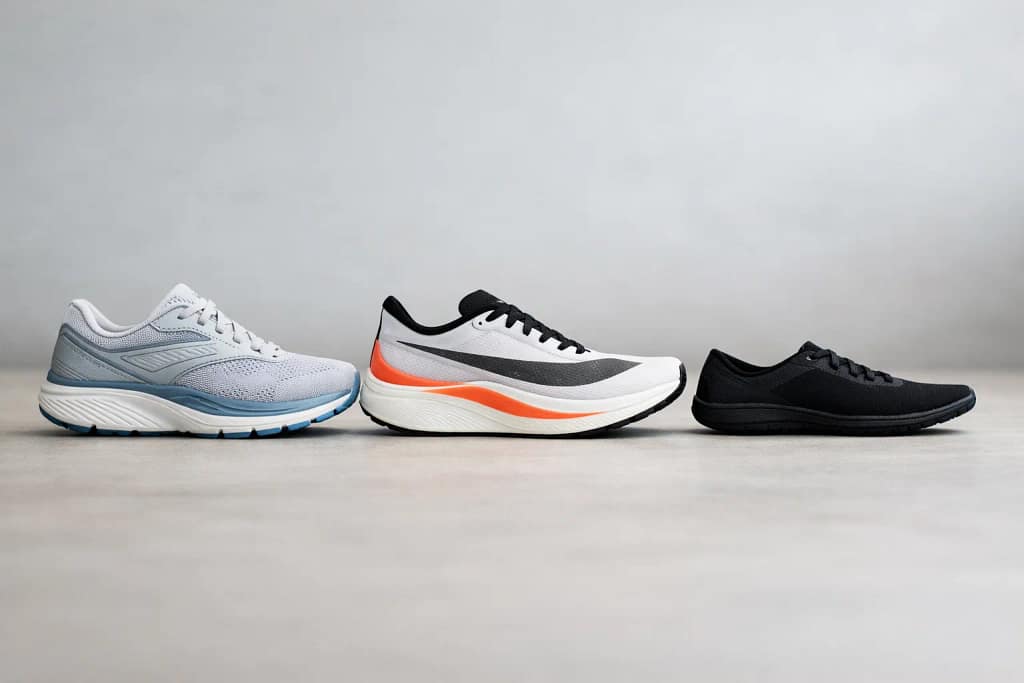
Carbon plate running shoes vs daily trainers
- Daily trainers: stable, forgiving, long-lasting
- Carbon shoes: faster feel, less forgiving, often less durable
Carbon plate vs “super trainer” (plated but not harsh)
Some shoes use plates in a more training-friendly way (often nylon or softer carbon setups). These can be a great “bridge” for beginners.
Carbon vs minimalist
If you’re asking are minimalist shoes good for you, know this: minimalist and carbon are both “change shoes.”
- Minimalist reduces support and stack
- Carbon increases stiffness and pushes you forward
Both require adaptation. Beginners should transition slowly.
How to Choose Carbon Plate Running Shoes For Beginners
I use four filters. Keep it simple.
1) Fit first (this beats every review)
If you need:
- wide toe box shoes
- wide carbon plate running shoes
- or you’re hunting widest carbon plate running shoes
Then your “best shoe” is the one that fits your shape without squeezing your toes or slipping at the heel.
Also common question: wide toe box shoes are often associated with Altra-like fit, so you may search shoes similar to altra if you want that toe room.
2) Stability (beginners need it more than elites)
Look for:
- Wider base
- Less aggressive rocker
- Secure upper
3) Your main use-case
- 5K/10K speed
- Marathon / long race
- Trail or mixed terrain
- Cross country
4) Budget
There are premium “race weapons,” and there are entry-level plated shoes. For beginners, value matters.
Nike Carbon Plate Shoes (and the Vaporfly Question)
Many beginners ask:
- nike carbon plate shoes
- do vaporfly have a carbon plate
Yes—Nike’s Vaporfly line uses a carbon-fiber plate (“Flyplate”) to create a propulsive feel. (Nike.com)
If you’re new, I’d think of Vaporfly/Alphafly as race-first shoes. Great when you’re ready. Not always fun for slow daily miles.
“Cheapest Carbon Plate Running Shoes” and Smart Budget Strategy
People search:
- cheapest carbon plate running shoes
- cheap carbon plated running shoes
- carbon plate running shoes sale
Here’s how I’d shop as a beginner:
- Buy a great daily trainer first
- Look for last-season carbon/plated models on sale
- Consider entry-level racers like the Atreyu Race Model (often cheaper than flagship shoes)
- Don’t chase the lightest shoe if you need stability
You can also find “plated feel” trainers that aren’t true super shoes, but still feel quick.
Best Super Shoes (Beginner-Friendly Way to Think About It)
Searchers love lists like best super shoes and best carbon plated running shoes, but beginners need categories, not a giant ranking.
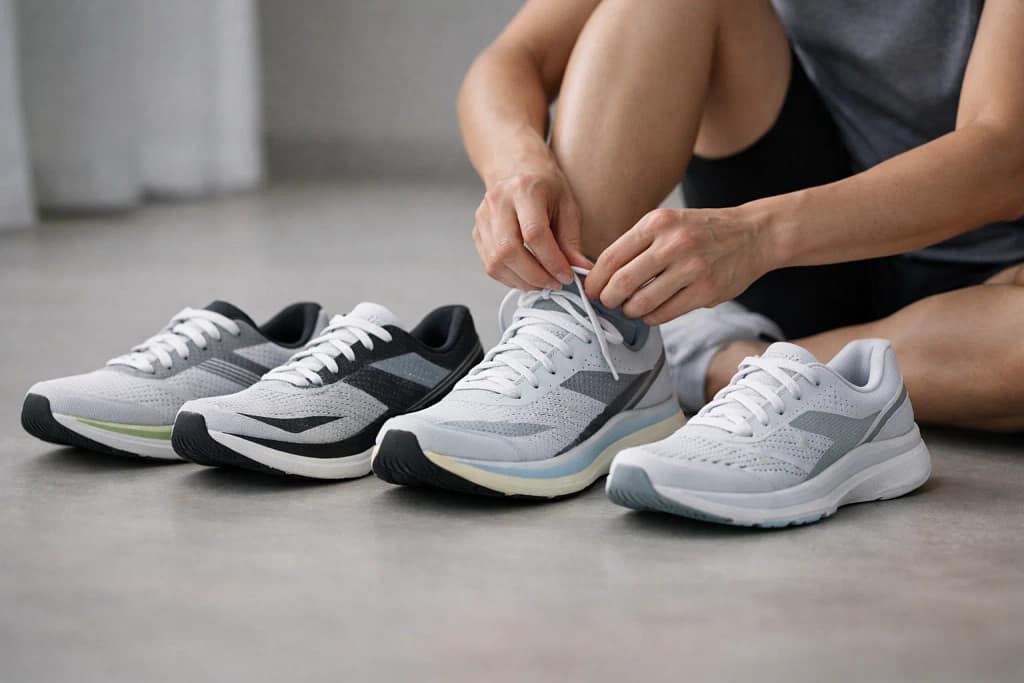
Best super shoes for marathon (beginner perspective)
For your first marathon, prioritize:
- Comfort over max aggression
- Stable geometry
- A forgiving ride late in the race
Example: HOKA Rocket X 3 is described as a carbon-fiber super shoe that “doesn’t skimp on support,” which is exactly the beginner-friendly concept you want for longer events. (hoka.com)
Best carbon plated running shoes women / men
The beginner rule is the same:
- Fit and stability first
Then choose the model that matches your goal pace and distance.
Wide carbon plate running shoes (what to do)
If your feet are wide:
- Choose brands that offer wide options where possible
- Size carefully and prioritize toe room
- Don’t “size up” so much that the heel slips
Related question: does on cloud make wide shoes comes up a lot with On fans. (Some On models do offer wide in certain markets; always check the specific model page before you buy.)
Best Carbon Plated Trail Shoes (and Why Trail Carbon Is Different)
People search best carbon plated trail shoes because trail running is growing fast.
Trail carbon shoes need:
- Grip
- Rock protection
- Stability on uneven surfaces
A well-known example is the HOKA Tecton X line (carbon plates in trail context). Trail plates can feel great on smoother dirt roads, but on technical terrain, stability matters more than “snap.”
Carbon Plated Running Shoes for XC (Cross Country)
You’ll see queries like carbon plated running shoes for xc and best shoes for cross country races.
Here’s the beginner guidance:
- True XC often involves spikes or lightweight trail-like shoes
- Carbon plates can be risky on wet grass, mud, sharp turns
- If you do XC, prioritize traction and control first
Adidas, ASICS, Saucony, HOKA: What Each Brand Is Doing (Simple)
I’m not going to overload you with tech words. Here’s the beginner-friendly summary:
adidas
adidas uses carbon-infused rods in some Adizero racers (ENERGYRODS 2.0) to help heel-to-toe transition. (adidas Australia)
ASICS
ASICS METASPEED talks about carbon plate placement differences depending on runner style (stride vs cadence). (asics.com)
Saucony
Saucony’s Endorphin Elite highlights a carbon plate designed for energy return and a fast ride. (saucony.com)
HOKA
HOKA Rocket X 3 positions itself as carbon-fiber speed without ignoring support, which many beginners appreciate. (hoka.com)
Nike
Nike’s Vaporfly line uses carbon-fiber plate + high-energy foam as a “system of speed.” (Nike.com)
Weird (But Common) Searches Beginners Make — Quick Answers
Basketball shoes with carbon fiber plate
Yes, some basketball shoes include plates or stiffening pieces, but basketball shoes with carbon fiber plate are not the same as running super shoes. They’re tuned for jumping, cutting, and stability, not forward rolling.
Running and tennis shoes
Running and tennis shoes are built for different movement patterns. If you do both, it’s usually better to own separate shoes.
Cheating running shoes
You’ll see “cheating running shoes” because super shoes changed racing. In reality, most organized races follow equipment rules. For beginners, don’t worry about that. Focus on training and comfort.
Nicest shoes ever made / best all around shoes
The nicest shoes ever made is subjective. The best all around shoes for a beginner runner are usually daily trainers, not carbon racers.
How to Start Using Carbon Shoes (Beginner Plan)
If you decide carbon is right for you, here’s my simple plan.
Week 1–2
- 1 short session per week in carbon shoes
- Example: 10-min warm-up + 4 x 1 minute faster + easy cool-down
Week 3–4
- Keep it 1 session per week
- Add gentle tempo segments (still short)
Race day
If everything feels good, race day is where carbon shoes shine.
Don’t do this early
- Don’t wear them for every run
- Don’t do long slow runs in them if they feel awkward
- Don’t ignore calf pain
Summary
Carbon plate running shoes can be a useful tool for beginners, but they work best when introduced at the right time and used correctly. The carbon plate adds stiffness and helps with forward motion, which can feel fast and efficient during workouts or races. However, these shoes are not designed for daily use by new runners and can increase stress on calves and feet if overused. For most beginners, the smartest path is to start with a comfortable daily trainer, then add a stable, forgiving carbon plate shoe later for speed sessions or race day. Choosing the right fit, limiting use, and progressing gradually are what make carbon plate shoes helpful rather than risky.
FAQs
What are supershoes?
They’re high-performance racing shoes built around bouncy foam and a stiff plate/rod system for efficient running at faster paces.
What does a carbon plate do in running shoes?
It adds stiffness to help the foam feel more propulsive and stable, creating a smoother forward roll.
Are carbon plated shoes worth it?
They’re worth it if you run consistently and want a race/workout shoe. If you’re brand new, daily trainers usually give better value first.
Do Vaporfly have a carbon plate?
Yes Nike describes the Vaporfly 4 with a full-length carbon-fiber Flyplate.
What’s the safest carbon shoe choice for beginners?
A stable, forgiving plated shoe (often slightly heavier, wider base) is usually safer than the most aggressive “race-only” model.