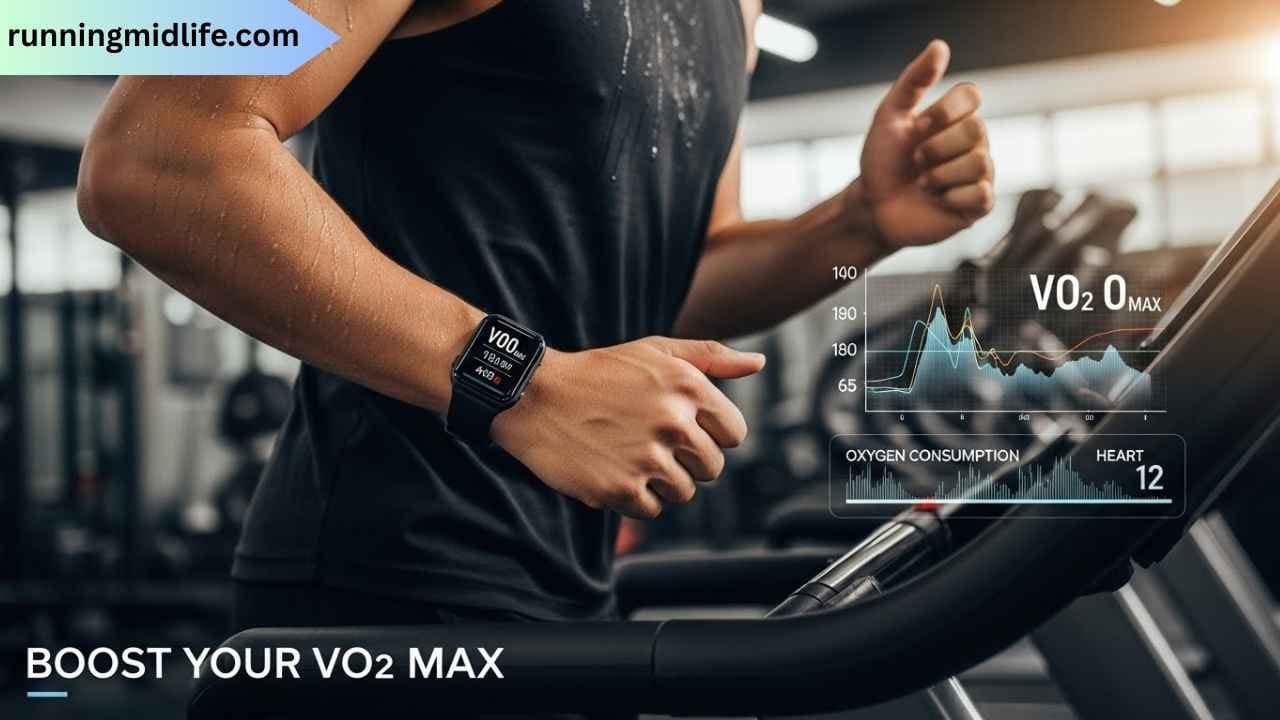
VO2 Max also known as maximal oxygen consumption is a key measure of your cardiovascular fitness and endurance performance. If you’ve ever wondered how much oxygen your body can use during exercise, you’re essentially asking about your VO2 Max.
This metric tells us the maximum amount of oxygen your body can use per minute and is one of the most critical factors in determining an athlete’s ability to perform over long distances or at high intensities.
But, like most aspects of our physical abilities, there are physiological limits to VO2 Max.
Understanding these limits can help you design better training plans, improve your endurance, and optimize your fitness.
In this article, I’ll break down the physiological limits of VO2 Max, how they affect your performance, and what factors can influence how high your VO2 Max can go.
Key Takeaways
-
VO2 Max is determined by multiple factors, including cardiac output, muscle oxygen uptake, and pulmonary capacity.
-
Genetics sets your baseline VO2 Max, but training can significantly improve it.
-
Lactate threshold plays a key role in maximizing VO2 Max and improving endurance.
-
HIIT, endurance training, and strength training are effective ways to boost VO2 Max.
-
Recovery is essential for sustained VO2 Max improvements and preventing overtraining.
What is VO2 Max?
Before we dive deep into the physiological limits of VO2 Max, let’s quickly review what VO2 Max actually is. In simple terms, VO2 Max refers to the maximum amount of oxygen your body can consume during exercise.
It’s a measure of how well your cardiorespiratory system (your heart, lungs, and blood vessels) can deliver oxygen to your muscles during aerobic exercise. The higher your VO2 Max, the more oxygen your body can use, which translates to better endurance and performance.
-
VO2 Max is typically expressed as milliliters of oxygen consumed per minute per kilogram of body weight (ml/kg/min).
-
A higher VO2 Max indicates better cardiovascular health and aerobic capacity, which helps athletes sustain performance over longer durations or at higher intensities.
How Is VO2 Max Measured?
VO2 Max is usually measured through a graded exercise test (GXT) where you gradually increase exercise intensity typically on a treadmill or stationary bike while wearing a mask that measures your oxygen consumption and carbon dioxide output. During this test, heart rate, oxygen uptake, and lactate levels are monitored, and the test continues until your oxygen consumption plateaus, signaling that you’ve reached your VO2 Max.
What Determines Your VO2 Max?
Your VO2 Max is influenced by several factors, both genetic and environmental:
-
Cardiovascular Efficiency:
The heart’s ability to pump oxygenated blood to muscles is a key factor in VO2 Max. As your cardiac output increases (how much blood your heart pumps per minute), your VO2 Max improves. -
Lung Capacity:
The lungs’ ability to exchange oxygen and carbon dioxide in the blood also plays a significant role. The more efficient your pulmonary system is at delivering oxygen to your blood, the higher your VO2 Max will be. -
Skeletal Muscle Efficiency:
Skeletal muscles need to be efficient at extracting and using the oxygen delivered by your cardiovascular system. Mitochondria, the powerhouses of muscle cells, play a key role here. The more mitochondria you have in your muscles, the more aerobic energy they can produce, which helps improve VO2 Max. -
Genetics:
While training can increase VO2 Max, a large part of your VO2 Max potential is determined by your genetics. Some people are naturally predisposed to higher VO2 Max values due to better oxygen delivery systems. -
Training:
Regular endurance training and high-intensity interval training (HIIT) can increase VO2 Max by improving the efficiency of your cardiovascular system and muscle oxygen uptake. Consistent cardiovascular exercise boosts the heart’s ability to pump blood and increases mitochondrial density in muscles, improving overall performance.
Physiological Limits of VO2 Max
While VO2 Max is a crucial determinant of endurance performance, there are physiological limits to how much it can improve or how high it can go. These limits are influenced by various biological factors and physiological processes, which are ultimately constrained by our body’s ability to use and deliver oxygen.
1. Genetic Limitations
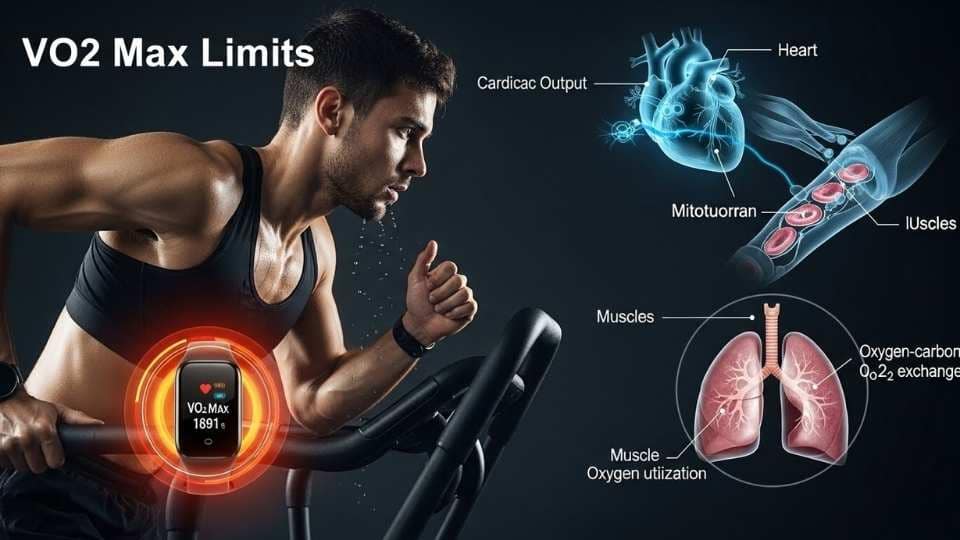
One of the key limiting factors of VO2 Max is genetics. As I mentioned earlier, genetics determine your aerobic potential, meaning that some individuals are naturally inclined to have a higher VO2 Max than others. The upper limits of your VO2 Max are largely determined by genetic factors such as heart size, lung capacity, and the ability of muscles to utilize oxygen.
However, even if you’re genetically predisposed to a lower VO2 Max, it’s still possible to significantly increase VO2 Max through proper training. Your body can adapt and make improvements, even if you’re not starting at an elite level.
2. Cardiovascular Capacity and Cardiac Output
Your cardiac output (the amount of blood your heart pumps per minute) is crucial in determining your VO2 Max. The more blood your heart can pump, the more oxygen your muscles can receive, and the higher your VO2 Max will be. However, there’s a physiological limit to how much the heart can grow or improve. Once you’ve reached that upper limit of cardiac output, further improvements in VO2 Max will be harder to achieve.
3. Mitochondrial Density and Muscle Oxygen Uptake
Your muscles’ ability to extract and use oxygen is another critical factor in VO2 Max. The more mitochondria you have in your muscle fibers, the more oxygen your muscles can utilize. While endurance training can increase mitochondrial density, there’s a limit to how many mitochondria your muscles can support.
As you become more fit, your muscles will continue to get better at using oxygen, but at a certain point, you will reach a plateau. To continue improving your VO2 Max, you’ll need to incorporate more intensity or variation in your training.
4. Pulmonary Capacity and Oxygen Transport
The ability of your lungs to deliver oxygen to the bloodstream is also a limiting factor for VO2 Max. The more efficiently your pulmonary system exchanges gases like oxygen and carbon dioxide, the higher your VO2 Max will be. However, there’s a limit to how much oxygen your lungs can absorb, and improving this efficiency requires high-altitude training or certain specialized exercises that help increase lung capacity.
The Role of Lactate Threshold in VO2 Max
One critical concept to understand when discussing VO2 Max is lactate threshold. Lactate is a byproduct of anaerobic exercise, and when the body’s ability to clear lactate slows down, it can lead to muscle fatigue. As your VO2 Max improves, so does your lactate threshold, meaning you can sustain higher intensities of exercise without accumulating lactate.
Training at or near your lactate threshold is an effective way to increase VO2 Max because it helps your body use oxygen more efficiently and delays the point where you feel fatigued.
How to Push Past VO2 Max Limits: Training and Recovery
Although there are physiological limits to VO2 Max, you can still improve within those limits through consistent and targeted training. Here are some strategies to maximize your VO2 Max:
-
Endurance Training: Regular aerobic exercise like long-distance running, cycling, or swimming builds aerobic capacity and improves cardiorespiratory fitness.
-
High-Intensity Interval Training (HIIT): HIIT workouts, which involve alternating between high-intensity intervals and recovery periods, can rapidly improve VO2 Max by pushing your body to its maximum oxygen uptake.
-
Strength Training: Strength training helps improve muscle efficiency, allowing your muscles to use oxygen more effectively during aerobic exercise.
-
Recovery: Adequate rest and recovery are essential for improving VO2 Max. Overtraining can lead to fatigue, and without enough rest, your VO2 Max may plateau or even decrease.
My Opinion
Understanding the physiological limits of VO2 Max is crucial for anyone looking to improve their endurance performance. While genetics and cardiac capacity do play a role in determining your VO2 Max, consistent training, particularly HIIT, endurance training, and lactate threshold work, can significantly improve this vital fitness metric.
By respecting the limits and strategically training, you can increase your VO2 Max and achieve your best endurance performance yet.
FAQs
How is VO2 Max measured?
VO2 Max is measured through exercise tests like the graded exercise test (GXT), where oxygen consumption is tracked while you exercise at increasing intensities.
Can my VO2 Max improve with age?
Yes, with consistent aerobic exercise and endurance training, you can maintain or even improve your VO2 Max as you age.
How does lactate threshold relate to VO2 Max?
Your lactate threshold indicates the point at which lactic acid builds up in your muscles. A higher lactate threshold allows you to sustain higher intensities without fatigue, which is crucial for improving VO2 Max.
Can VO2 Max be improved with strength training?
Yes, strength training improves muscle efficiency and helps increase the overall oxygen consumption in muscles, indirectly boosting VO2 Max.
What are some common ways to improve VO2 Max?
HIIT workouts, endurance training, and lactate threshold training are all effective methods to boost VO2 Max.