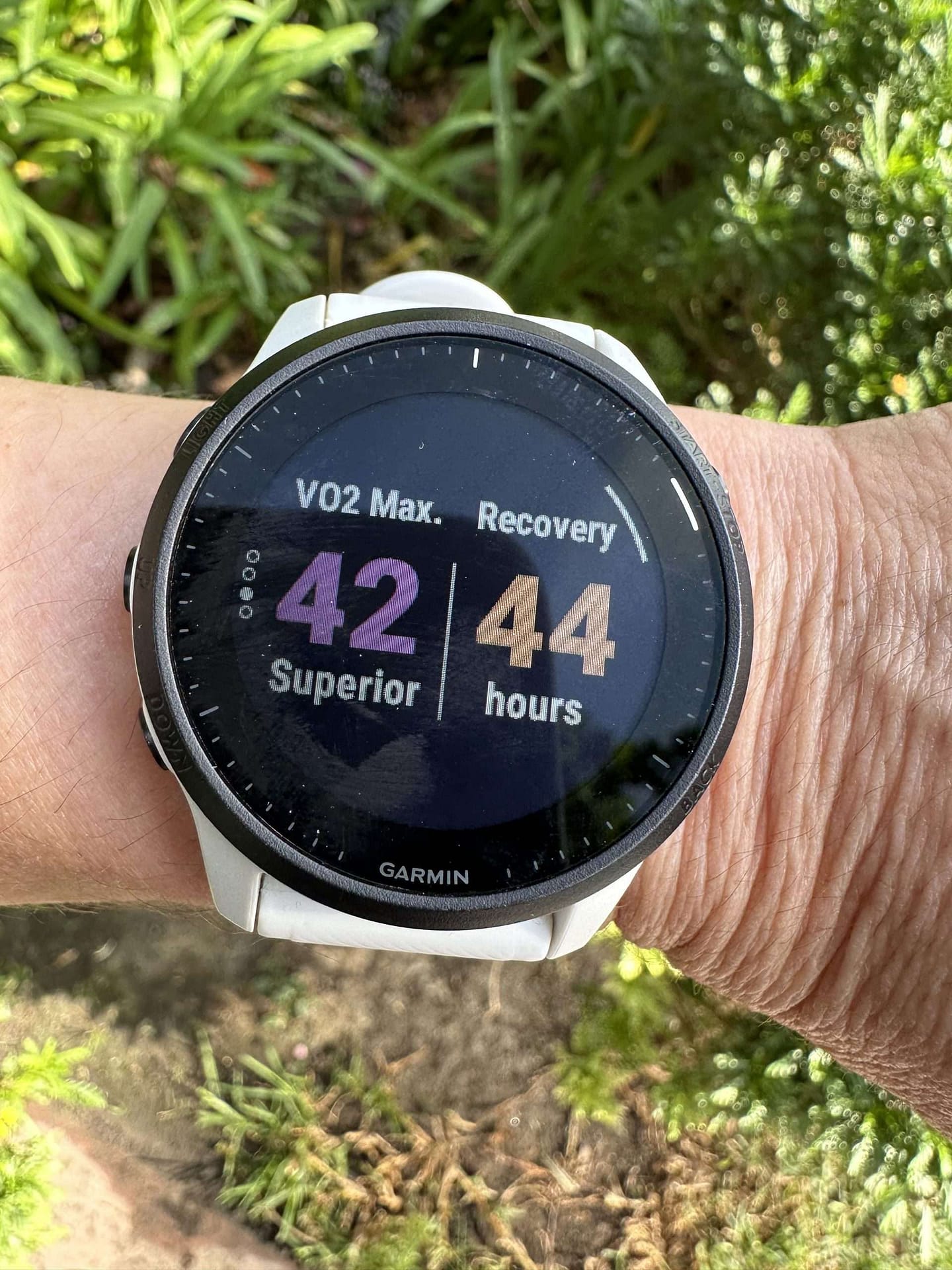
VO2 Max for Women Over 50 becomes increasingly important as running, recovery, and energy begin to change in midlife.
Many women notice that:
- running feels harder
- endurance declines
- recovery takes longer
- fatigue appears faster
And while aging plays a role, much of this is connected to one important physiological factor:
👉 VO2 max.
The good news is this:
VO2 max can be improved at almost any age.
And improving it doesn’t necessarily require harder training.
For women over 50, the key is training smarter—not more intensely.
What VO2 Max Actually Means
VO2 max refers to the maximum amount of oxygen your body can use during exercise.
It is considered one of the best measurements of:
- cardiovascular fitness
- endurance capacity
- aerobic efficiency
The term “VO2” stands for:
- V = volume
- O2 = oxygen
In simple terms:
👉 it measures how efficiently your body uses oxygen to produce energy.
The more oxygen your body can use efficiently, the longer and easier endurance activity becomes.
👉 Learn more from the American Heart Association:
https://www.heart.org/en/healthy-living/fitness/fitness-basics/measuring-how-fit-you-are
Why This Matters More After 50
VO2 max naturally declines with age.
Research suggests this decline can accelerate after midlife if aerobic fitness is not maintained.
This affects:
- endurance
- stamina
- recovery
- overall health
But here’s what many women don’t realize:
A lower VO2 max does not mean you are incapable of improving.
It often means your body needs a different training strategy.
The Connection Between Oxygen and Energy
Every run depends on oxygen delivery.
Your body must:
- take in oxygen through breathing
- transport it through the blood
- deliver it to muscles
- convert it into usable energy
When this system becomes less efficient:
- you fatigue faster
- effort feels harder
- pace slows down
This is why improving aerobic efficiency matters so much.
Aging and Aerobic Capacity
Several physiological changes affect endurance after 50.
These include:
- reduced muscle mass
- cardiovascular changes
- hormonal fluctuations
- reduced mitochondrial efficiency
Mitochondria are the energy-producing structures inside your cells.
Aerobic training helps improve how efficiently they function.
👉 Research overview:
https://www.ncbi.nlm.nih.gov/pmc/articles/PMC4540834/
Hormonal Changes and Endurance
For women, perimenopause and menopause also influence aerobic performance.
Estrogen affects:
- cardiovascular health
- muscle recovery
- metabolism
- blood flow
As estrogen fluctuates or declines, endurance training may feel different.
This is why many women notice:
- heavier legs
- reduced stamina
- slower recovery
Even if they remain active.
VO2 Max and Longevity
One of the most fascinating aspects of VO2 max is its connection to healthy aging.
Research has shown that higher aerobic fitness is associated with:
- lower cardiovascular risk
- improved metabolic health
- better cognitive function
- increased longevity
Some researchers even describe VO2 max as a “vital sign” of long-term health.
👉 Mayo Clinic overview:
https://www.mayoclinic.org/tests-procedures/fitness-testing/in-depth/fitness/art-20046433
Signs Your Aerobic Fitness Needs Support
You may benefit from improving aerobic capacity if:
- easy runs feel difficult
- you become breathless quickly
- recovery takes longer
- fatigue builds throughout the week
- your endurance has declined
These signs are common in midlife runners.
But they are not permanent.
Why High-Intensity Training Alone Is Not the Answer
Many runners assume the solution is harder workouts.
But excessive intensity can backfire after 50.
Too much high-intensity training increases:
- cortisol
- inflammation
- recovery demands
Without enough aerobic foundation, the body becomes overwhelmed.
This often leads to:
- burnout
- injury
- inconsistent training
The Importance of Aerobic Base Training
The most effective way to improve endurance is often lower intensity aerobic training.
This includes:
- Zone 2 running
- easy jogging
- brisk walking
- conversational pace runs
This type of training improves:
- oxygen efficiency
- fat metabolism
- mitochondrial function
- cardiovascular health
👉 Learn more about heart rate training:
https://www.heart.org/en/healthy-living/fitness/fitness-basics/target-heart-rates
Why Slower Running Works
One of the biggest misconceptions in endurance training is believing every run should feel hard.
But aerobic fitness improves best through consistency.
Slower running allows you to:
- train longer
- recover better
- reduce stress load
- maintain consistency
This is the foundation of the Slow Running for Life™ method.
Walking and VO2 Max
Walking is often underestimated.
But brisk walking can improve aerobic health significantly—especially for women rebuilding endurance.
Walking supports:
- recovery
- circulation
- fat metabolism
- cardiovascular conditioning
It also reduces stress compared to high-intensity exercise.
The Role of Strength Training
Muscle mass becomes increasingly important after 50.
Strength training helps support:
- running economy
- posture
- injury prevention
- metabolic health
Even 2 short sessions per week can improve overall endurance performance.
Recovery Becomes More Important
Recovery is one of the most overlooked parts of endurance training in midlife.
Without recovery:
- fitness adaptations decline
- fatigue accumulates
- performance stalls
This is why recovery should be treated as part of training—not a reward after it.
Nutrition and Oxygen Efficiency
Proper fueling supports aerobic performance.
Under-fueling can reduce endurance dramatically.
Women over 50 especially benefit from:
- adequate protein
- carbohydrates around training
- hydration
- anti-inflammatory foods
👉 Read:
https://runningmidlife.com/anti-inflammatory-diet-for-runners
Sample Weekly Structure
Here’s a simple endurance-focused training week:
Monday
Walk or rest
Tuesday
Easy aerobic run (20–30 minutes)
Wednesday
Strength training or walking
Thursday
Easy run (20–30 minutes)
Friday
Recovery walk
Saturday
Long easy run (30–45 minutes)
Sunday
Rest
This structure emphasizes:
- aerobic development
- recovery
- consistency
Common Mistakes
Running Every Run Too Hard
This creates fatigue instead of endurance.
Ignoring Recovery
Recovery is essential for adaptation.
Comparing to Younger Performance
Your body is different now.
Training should evolve too.
Under-Eating
Insufficient fuel increases stress and fatigue.
How to Measure Progress
Improving aerobic fitness often looks like:
- easier breathing
- lower heart rate at same pace
- improved recovery
- less fatigue
- greater endurance
You may also notice daily energy improving—not just running performance.
The Mental Shift
Perhaps the most important change is mindset.
The goal after 50 is not constant intensity.
It is sustainable endurance.
Not proving.
👉 Continuing.
Why This Matters for Long-Term Running
Improving aerobic fitness allows you to:
- run longer
- recover better
- maintain consistency
- support healthy aging
This is what helps women continue running for decades.
Final Thoughts
VO2 Max for Women Over 50 is not just about performance.
It is about:
- energy
- endurance
- longevity
- quality of life
And improving it does not require punishing workouts.
It requires consistency, aerobic training, recovery, and a sustainable approach.
You do not need to train harder.
You need to train smarter.
If you want to build endurance without burnout:
👉 Start with the 7-Day Running Reset
https://preview.mailerlite.io/forms/1548928/187899777269106477/share
Or explore the full system at:
👉 RunningMidlife.com