Understanding VO2 Max and VO2 is key when it comes to tracking your fitness and improving your health.
Whether you’re an athlete pushing for that next level or just someone aiming to get healthier, knowing the difference between these two terms can make a huge difference in how you approach your exercise routine and overall wellness.
In this post, I’ll break down what VO2 Max and VO2 really are, how they differ, and why it matters to you. Let’s Read It
Key Takeaways
-
VO2 Max is the maximum volume of oxygen your body can use during intense exercise, indicating cardiovascular fitness.
-
VO2 measures the amount of oxygen consumed during any given activity, but VO2 Max is the key indicator of endurance and performance.
-
Improving VO2 Max can enhance endurance, athletic performance, and overall cardiovascular health.
-
Wearable devices like Apple Watch, Fitbit, and Garmin offer convenient ways to estimate VO2 Max.
-
Tracking VO2 Max is important for both athletes and non-athletes, helping to monitor fitness, health progress, and reduce the risk of chronic conditions.
A Short Info Of Both VO2 & VO2 MAX
What is VO2?
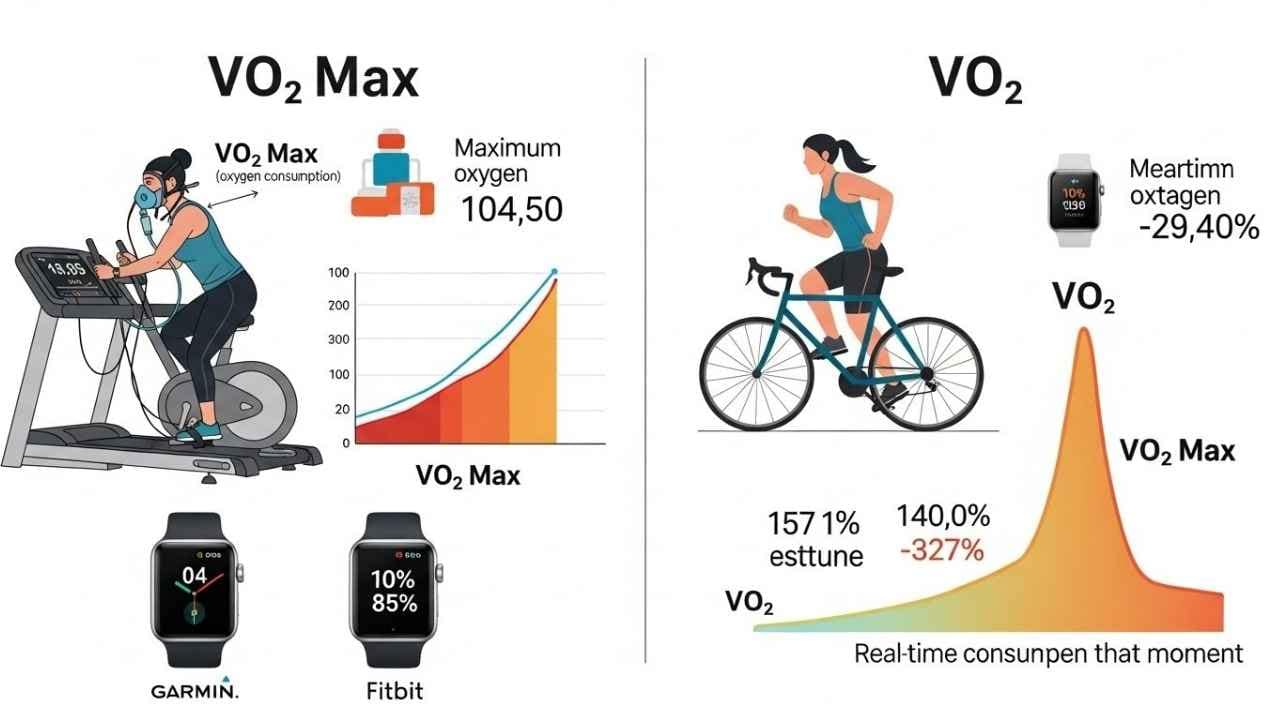
To kick things off, let’s talk about VO2—it’s simple, really. VO2 refers to the volume of oxygen your body uses at any given moment during physical activity. The “V” in VO2 stands for volume, and the “O2” stands for oxygen. So, VO2 is a measurement of how much oxygen your body is consuming during exercise.
Why does this matter? Because oxygen is critical for energy production during any physical activity. The more oxygen you consume, the more fuel your muscles get to perform, which impacts your stamina, endurance, and overall performance.
But here’s the catch: VO2 alone doesn’t tell us everything we need to know about how your body performs over time, especially during longer or more intense physical exertion. That’s where VO2 Max comes in.
What is VO2 Max?
Now, let’s get to the big one: VO2 Max. In simple terms, VO2 Max is the maximum volume of oxygen your body can utilize during intense exercise. It’s often referred to as your maximal oxygen uptake.
Why is this important? Well, VO2 Max is one of the best indicators of cardiovascular fitness and endurance. If you’re running a race, doing a tough workout, or cycling up a steep hill, your body will reach a point where it can no longer use oxygen effectively to fuel your muscles. That point is your VO2 Max.
VO2 Max vs. VO2: What’s the Difference?
So now we’ve covered both, but let’s make sure you fully understand the difference. It’s pretty simple:
-
VO2 measures how much oxygen your body is using at any given time.
-
VO2 Max measures the highest amount of oxygen your body can use during intense exercise.
In other words, VO2 Max is the ceiling—the maximum your body can handle. It’s the peak of your endurance.
How Is VO2 Max Calculated?
Understanding VO2 Max is crucial because it’s an excellent indicator of how well your cardiovascular system is working. It can help you track your fitness level, monitor progress, and even predict your performance in endurance sports.
There are different ways to measure VO2 Max:
-
Laboratory Testing: The most accurate method, involving a treadmill or cycling test with a mask to measure oxygen consumption. As the intensity increases, you keep pushing until your oxygen consumption plateaus. That plateau is your VO2 Max.
-
Wearable Devices: Devices like the Apple Watch, Fitbit, and Garmin estimate VO2 Max based on heart rate data, activity level, and other factors. While these aren’t as accurate as lab testing, they give you a good ballpark figure and allow you to track progress over time.
-
Submaximal Testing: This method estimates VO2 Max using heart rate data collected while you’re exercising at a steady, moderate pace. It’s less accurate than the lab or wearable methods but still offers useful insights.
VO2 Max vs. VO2: Why Should You Care?
Now that you know what these two terms mean, you might be wondering, “Why does any of this matter to me?” Whether you’re a professional athlete, someone who wants to get fitter, or simply looking to track your health progress, knowing your VO2 Max can offer huge benefits.
1. Improved Endurance and Performance
If you’re an athlete, tracking your VO2 Max is essential. Whether you’re training for a marathon, improving your cycling ability, or even pushing yourself in the gym, your VO2 Max tells you how well your body can perform under pressure. The higher your VO2 Max, the better your endurance.
2. Better Health Monitoring
You don’t have to be an athlete to benefit from knowing your VO2 Max. It’s an excellent marker of overall health. A higher VO2 Max indicates a stronger cardiovascular system, which can lower your risk of heart disease and improve overall vitality. Tracking your VO2 Max helps you make sure your heart and lungs are working as they should.
3. Fitness Progress Tracking
One of the best reasons to track VO2 Max is to monitor your fitness progress. If you’ve been training hard and pushing your limits, seeing an increase in VO2 Max over time is a great sign that your cardiovascular system is improving. It’s a real, measurable way to see the results of your hard work.
How to Improve Your VO2 Max
If you’re aiming to increase your VO2 Max, there are several strategies that can help you achieve that:
1. Interval Training
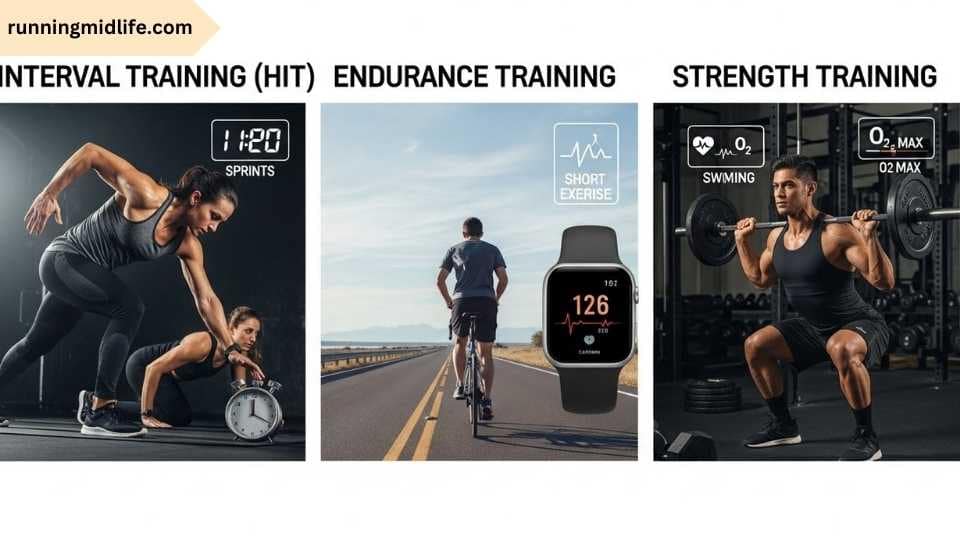
High-intensity interval training (HIIT) is one of the most effective ways to boost VO2 Max. This involves alternating between short bursts of intense exercise and periods of rest or lower-intensity exercise. HIIT helps your body become more efficient at utilizing oxygen during exercise.
2. Endurance Training
Long, steady-state exercises like long-distance running, cycling, or swimming improve your body’s ability to use oxygen over time. Regular aerobic training increases the efficiency of your cardiovascular system, raising your VO2 Max.
3. Strength Training
While strength training isn’t as directly linked to VO2 Max as cardio, building muscle mass can help improve your cardiovascular health overall. More muscle means more efficient oxygen use, which indirectly contributes to better VO2 Max.
The Role of VO2 Max in Sports
In sports, VO2 Max plays a critical role, especially in endurance sports like running, cycling, and swimming. For example:
-
Runners: VO2 Max is one of the most important factors in long-distance running. A high VO2 Max means more oxygen can be delivered to the muscles, leading to better endurance and faster times.
-
Cyclists: Cyclists rely on VO2 Max to maintain their speed and endurance during long rides. Improving your VO2 Max means you can push harder and for longer.
-
Swimmers: Like runners and cyclists, swimmers benefit from higher VO2 Max values. The ability to efficiently use oxygen can help swimmers maintain energy and stamina throughout their races.
VO2 Max for Non-Athletes: Why It Still Matters
Even if you’re not training for a marathon or competitive sport, knowing your VO2 Max can still help you live a healthier life. Studies show that people with higher VO2 Max levels tend to have lower risks of heart disease, better blood sugar control, and greater overall longevity. Improving your VO2 Max can help you stay fit and reduce the risk of chronic conditions like high blood pressure and diabetes.
VO2 Max vs. VO2: Which One Should You Focus On?
While VO2 is helpful for understanding how much oxygen you’re using during a specific activity, VO2 Max gives a much broader picture of your fitness and health. VO2 Max is a far more powerful measure of endurance, performance, and cardiovascular health. If you’re looking to track your fitness over time, VO2 Max is the metric you should focus on.
My Opinion On Differences Between VO2 and VO2 Max
In conclusion, while VO2 measures the amount of oxygen you’re using at any given time, VO2 Max tells you how much oxygen your body can use at its maximum potential during intense exercise. VO2 Max is the ultimate indicator of your cardiovascular fitness and endurance, whether you’re an athlete or just someone looking to stay healthy.
By tracking and improving your VO2 Max, you can boost your endurance, reduce health risks, and make measurable progress toward your fitness goals. So, next time you see a VO2 Max score, you’ll know exactly what it means and how to use it to level up your health and fitness!
What is the difference between VO2 and VO2 Max?
VO2 is the amount of oxygen your body uses at any given time during exercise, while VO2 Max refers to the maximum amount of oxygen your body can use during intense activity.
How do I calculate VO2 Max?
VO2 Max is typically measured using a treadmill or cycling test in a lab or estimated through wearable devices like Apple Watch, Fitbit, or Garmin.
Can I improve my VO2 Max?
Yes, VO2 Max can be improved through regular aerobic exercise, such as running, cycling, or swimming, and high-intensity interval training (HIIT).
How important is VO2 Max for athletes?
For athletes, VO2 Max is crucial for improving endurance and performance in endurance sports like running, cycling, and swimming.
Can non-athletes benefit from improving VO2 Max?
Absolutely! Improving VO2 Max benefits overall health, reduces the risk of heart disease, and increases longevity.